White elephant rules and a printable host pack
White elephant is a gift swap game with simple rules: each player brings one wrapped gift and draws a number. On your turn, open a wrapped gift or steal an opened one; anyone who loses a gift chooses again. Our house rules freeze a gift after its third steal and end with one optional swap.
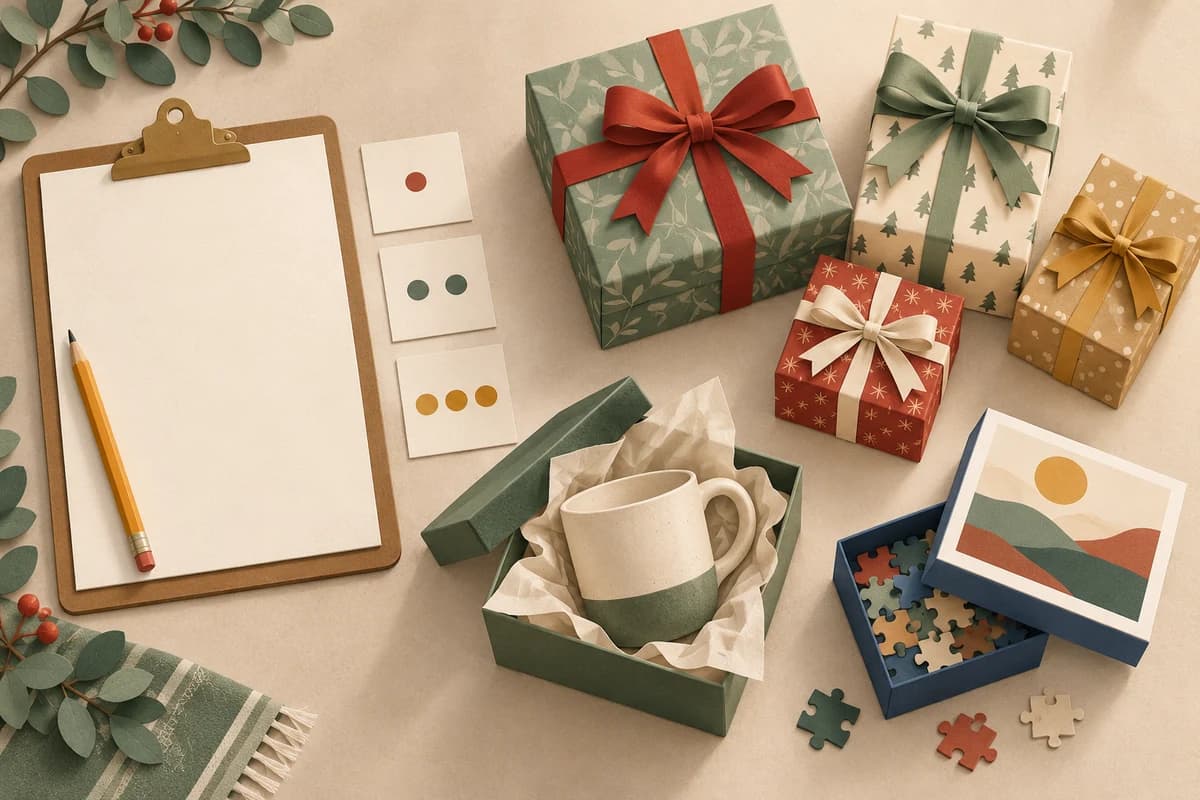
Digital illustration. The slips represent turn order; record numbered turns and agreed swap rules in the host sheet.
- Bring one gift
- Ask each participant to bring one wrapped gift.
- Agree on house rules
- Choose and share the swap rules before the event.
- Track turns
- The host records numbered turns and applies the agreed rules consistently.
- On each turn, a player opens a wrapped gift or steals an opened one, and anyone who loses a gift chooses again.
- Set the price limit, gift style and steal limit before you invite anyone, and put them in the invitation.
- In these house rules a gift can be stolen once per round and freezes for good on its third steal.
- The five-page printable pack has guest rules, a host desk sheet, turn slips, a gift tracker and planning cards. No signup is needed.
What is a white elephant gift exchange?
A white elephant gift exchange is a party game where wrapped gifts are opened one at a time and can be stolen. The fun comes from the trading, not from what the gifts cost.
The name borrows an old meaning of "white elephant": a possession its owner no longer wants but finds hard to get rid of. Dictionary.com traces the phrase to a legend that a king of Siam gave a sacred albino elephant to anyone who displeased him, and the cost of its upkeep ruined them.
Many groups call the same game a Yankee swap or Dirty Santa. HuffPost reports that Yankee swap is more common in New England and Dirty Santa in the South, but the open-or-steal turn stays the same.
How do you play white elephant?
These are the basic white elephant rules most groups start from. The full house ruleset further down adds the steal limits and the ending.
- Everyone who wants to play brings one wrapped gift under the agreed price limit.
- Put the gifts in one pile and have each player draw a number.
- Player 1 opens a gift and shows it to the room.
- Each next player either opens a new gift or steals an opened gift from someone else.
- A player whose gift is stolen opens a new gift or steals a different one. They cannot take back the gift that was just taken from them.
- The turn passes to the next number once someone opens a new gift.
- When every gift is open, Player 1 may make one final swap, and the game ends.
What should you decide before inviting people?
Settle four things before the invitation goes out: the price limit, the gift style, who is playing and when the exchange starts. Then share one written version of the rules and use it all game.
The free printable host pack has five pages: guest rules, a host desk sheet, turn slips, a gift tracker and an invitation planning card with a separate no-stealing variant. Print the pages you need at 100%, portrait Letter or A4, with browser headers and footers off. No signup is needed, and your browser may also let you save the pages as a PDF.
Use this complete white elephant ruleset
These are InviteBird's suggested house rules, not an official standard. Share this exact version before the party and use it from the first turn to the last.
| Term | Meaning in this game |
|---|---|
| Steal | Take an eligible opened gift from its current holder. Opening a wrapped gift is not a steal. |
| Round | One numbered player's turn plus any replacement choices caused by steals. It ends when someone opens one new wrapped gift. |
| Frozen | A gift that has reached its third steal across numbered rounds. It cannot be stolen again or used in the final swap. |
- Before the event, agree on the cap, gift style and regift policy. Participation is optional. Each participating person brings one wrapped gift; spectators need none. Make any spare-gift arrangement clear in advance.
- Before drawing, count the actual participants and usable wrapped gifts. Resolve missing gifts or late arrivals first. Each participant then draws one unique number from 1 through the number of players. Do not insert a new player after play begins.
- Player 1 opens one wrapped gift and shows it to everyone. Record its steal count as zero.
- For each later number in order, that player opens a wrapped gift or steals an eligible opened gift. Eligible means it is not frozen and has not already been stolen during this round.
- After a steal, increase that gift's count by one and mark it as stolen this round. Its previous holder now opens a wrapped gift or steals another eligible gift. They cannot immediately take the same gift back: it has already been stolen in this round.
- Continue replacement choices until one person opens a wrapped gift. This ends the round. Every player who has taken a numbered turn now holds exactly one gift. Clear this-round markers; keep the accumulated steal counts.
- On a gift's third steal across numbered rounds, freeze it immediately with its new holder. It cannot be stolen again or included in the final swap. Its former holder still needs to choose; freezing does not end the round.
- After the last numbered round, every gift is open and every player holds one. Player 1 may keep their gift. If their own gift is unfrozen, they may instead make one direct swap with another unfrozen gift. No replacement choice or new chain follows; the game ends immediately. If Player 1 holds a frozen gift, or all other gifts are frozen, there is no final swap.
- Guests keep the gift they hold at the end. A later exchange is a separate voluntary agreement between the people involved, not another compulsory game turn.
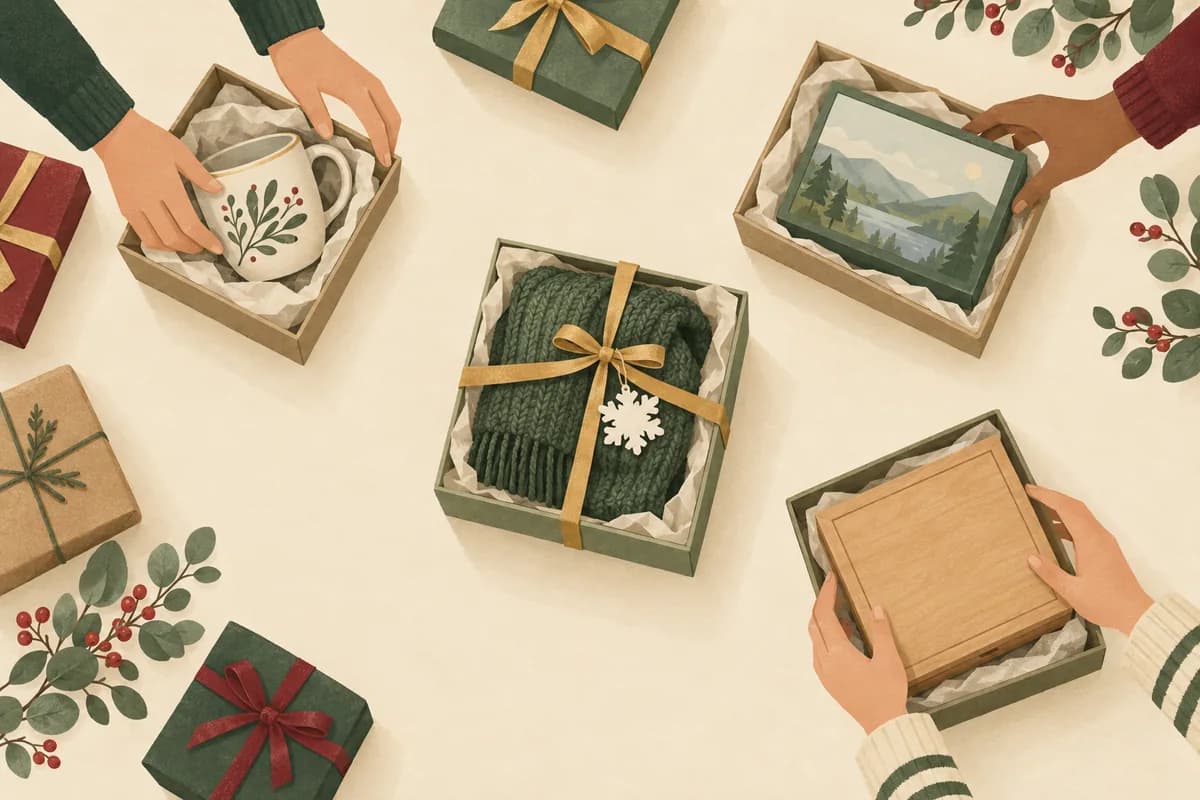
Digital illustration. Mark a gift as frozen the moment it is stolen for the third time; it then stays with its holder until the end.
- Frozen gift
- On its third steal across the game, a gift freezes with its new holder. Nobody can steal it again or use it in the final swap.
- Still in play
- Unfrozen opened gifts can still be stolen, but each one only once per round.
Follow one four-player exchange from start to finish
This walkthrough uses four players, P1 to P4, and gifts A to D. Each row is one finished numbered round: the chain ends when someone opens a gift, so everyone who has had a turn holds one.
| Stage | Actions | Holdings after the round | Steal counts |
|---|---|---|---|
| 1 | P1 opens A. | P1=A | A=0 |
| 2 | P2 steals A. P1 opens B. | P1=B; P2=A | A=1; B=0 |
| 3 | P3 steals A. P2 steals B. P1 opens C. A and B have already been stolen this round. | P1=C; P2=B; P3=A | A=2; B=1; C=0 |
| 4 | P4 steals A: its third steal freezes A with P4. P3 steals B. P2 steals C. P1 opens D. | P1=D; P2=C; P3=B; P4=A frozen | A=3; B=2; C=1; D=0 |
| Final choice | P1 swaps D directly for P3's unfrozen B. Play ends; P3 does not choose again. | P1=B; P2=C; P3=D; P4=A frozen | No further numbered round |
| Choice | Result |
|---|---|
| Keep D | Everyone keeps the holdings shown after round 4. The game ends. |
| Swap D for B or C | The two holders exchange gifts directly. The game ends with no new chain. |
| Select frozen A | Not allowed. A stays with P4. |
The swap in the last row is optional. If Player 1 already holds a frozen gift, they keep it and play ends. If nobody steals all game, each player simply opens a gift, and Player 1 still gets the same closing choice.
How do you track turns and steals at the party?
Give one person the host desk: the turn slips, a gift tracker and the written rules. That person calls each number, records every steal and settles questions from the rules card.
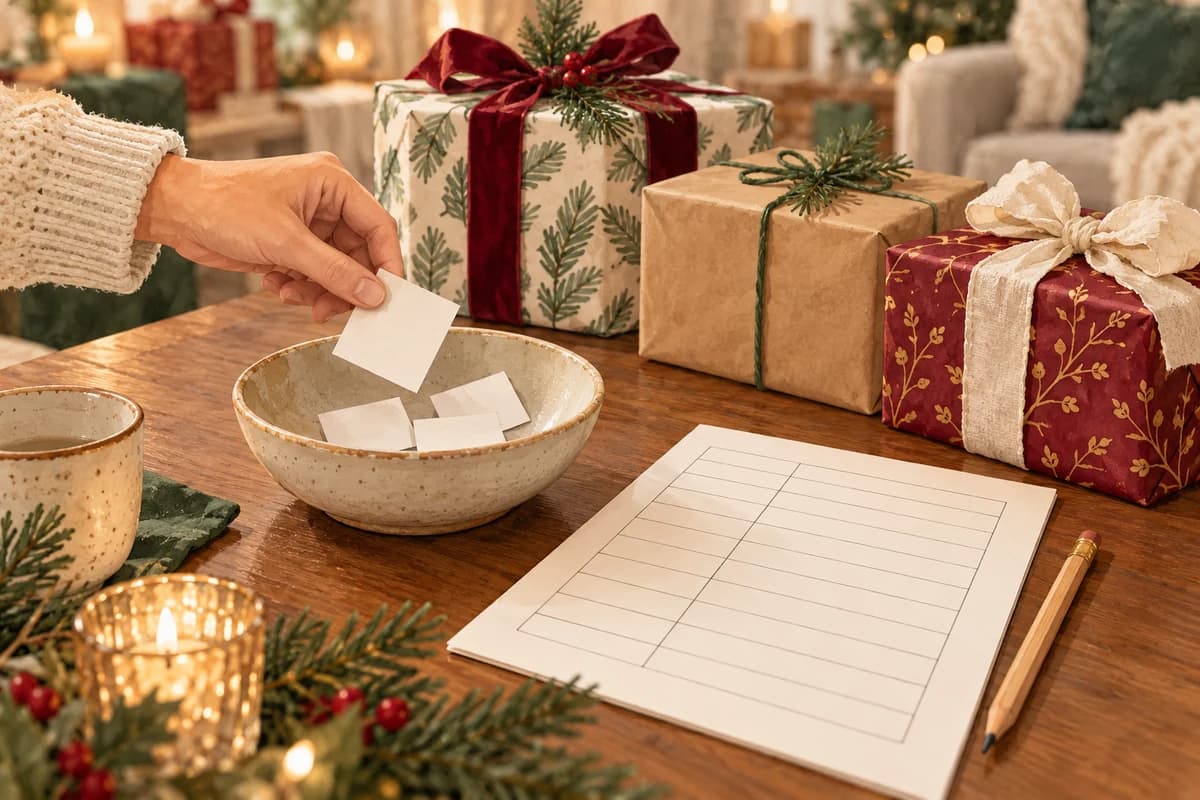
Digital illustration. Prepare turn slips and a separate gift tracker before play. Use the printable pack and written rules for the actual entries.
- Turn slips
- Give each participating player a unique place in the turn order.
- Gift tracker
- Record gift movement and the steal count using the chosen rules.
- Host desk
- Keep the written rules within reach when a question interrupts play.
- Use only the required turn numbers, once each. The pack supplies 1–24 and blank slips for additional unique numbers; 24 is a sheet layout, not a group-size recommendation or maximum.
- Put the wrapped gifts where everyone can see them. Identify a gift with a small letter tag or a short nickname when it opens; record that same ID on the tracker. Avoid personal contact details.
- After each steal, tick the next cumulative steal box, update the current holder and add a removable this-round marker beside the gift. At the third tick, mark FROZEN immediately.
- When someone opens a gift, confirm that everyone who has taken a numbered turn has one. Clear only the removable round markers, then call the next number.
- After the last opening, check frozen gifts and give Player 1 the closing choice. If a swap happens, update the two holders and stop.
Guests can stay seated while a willing helper moves gifts. Keep opened gifts in view, read each item out loud, and put the printed rules where everyone can see them.
Which white elephant variations can you choose?
Pick one variation before the party and print it on the rules card. Changing the rules halfway through a game confuses players and slows every turn.
| Variation | How it works | Good for |
|---|---|---|
| Classic open-or-steal | Open a gift or steal one, with no steal limit. Player 1 trades at the end. | Small groups with time to spare |
| Three-steal limit (these house rules) | A gift freezes on its third steal, and each gift can be stolen once per round. | Bigger groups that need a clear finish |
| No-steal exchange | Draw numbers; each player opens one gift and keeps it. | Young kids and anyone who dislikes conflict |
| Themed swap | Same rules, but every gift fits one theme, such as cozy, a favorite book or a local treat. | Groups tired of gag gifts |
| Dice game | Players roll a die, and the number says open, steal, swap or pass. | Big groups who want fast turns |
| Left-right story | The host reads a short story, and gifts pass left or right each time those words come up. | Seated groups and families |
| Favorite things party | Each player brings a few of one favorite item under the cap, and draws decide who takes each one. | Friends who want useful gifts |
| Yankee swap or Dirty Santa | Other names for the classic game, not different rules. | Any group: use the name your guests know |
Rules vary from group to group. A 2022 University of Florida event sheet, for example, let a gift pass through many hands in one round and let Player 1 force a final trade for any gift.
Prefer a no-stealing exchange? Use a separate rule card
Choose this complete alternative before inviting guests, rather than changing rules partway through the exchange.
- Agree on the cap, gift style and regift policy. Participation is optional; each player brings one wrapped gift.
- Resolve missing gifts and arrivals before starting, then draw one unique order number per player.
- In number order, each player chooses and opens one wrapped gift, shows it and keeps it.
- There are no steals and no final forced swap. When the last gift is opened, the exchange ends. Any later trade is voluntary.
What makes a good white elephant gift?
A good white elephant gift is something several people would want, or laugh at, for the agreed price. Wrap it so the shape gives little away.
| Gift style | Ideas | Watch out for |
|---|---|---|
| Useful | A good mug, warm socks, a phone stand, a small kitchen tool | Sizes or tastes that suit only one person |
| Cozy | A soft throw, cocoa mix with a mug, a candle | Strong scents for guests who are sensitive to them |
| Games and puzzles | A card game, a small jigsaw puzzle, a deck of question cards | Missing pieces in a regift |
| Food treats | A jar of jam, local coffee, a hot sauce set | Allergies, and alcohol at work or with under-21s |
| Funny | A giant pen, a goofy mug, a "pet rock" kit | Jokes that could embarrass a coworker |
| Regift (if allowed) | Something unused, still in its box | Anything the giver's friends would recognize |
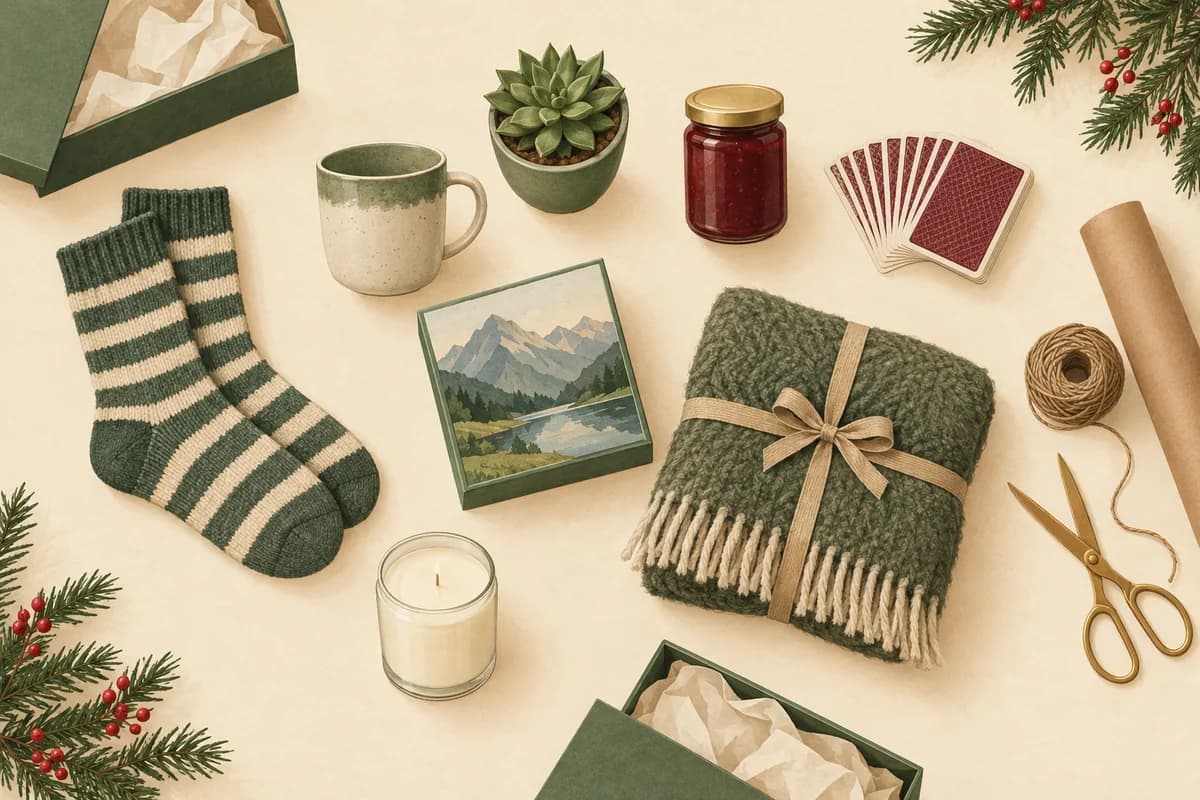
Digital illustration. Gifts that many people would happily take home make for more steals than very personal items.
- Easy to like
- Socks, a mug, a small plant, a jar of jam, cards, a puzzle, a throw or a candle are the kind of gift many guests would want.
- Wrapping
- Wrap each gift so its shape gives little away.
Skip these if…
A few gifts and rules need a quick check against your guest list before the party.
- Work parties: skip gag gifts about bodies, politics or religion, and leave out alcohol unless the organizer allows it.
- Young kids playing: use the no-steal version, or allow one steal per gift, so nobody ends the night in tears.
- Mixed budgets: keep the cap low and say homemade or regifted gifts are welcome.
- Food gifts: list what is in anything homemade, so guests with allergies can decide.
- Guests who would rather watch: playing is optional, and spectators need no gift.
- Moving around: a helper can carry gifts, so nobody has to get up for a steal.
What should the invitation say about white elephant?
Put the price limit, gift style, start time and a link to the rules in the invitation. Ask how many will play as well as how many will come.
Fill-in invitation — replace every bracketed field before sending
Fictional example. Adapt the details for your event.
Join us for [gathering name] on [full date] at [venue and full address].
Arrive from [arrival time]; our optional white elephant exchange begins at [start time]. [State meal or refreshments.]
To play, bring one wrapped [chosen gift style] gift per participating person, costing no more than [host-chosen cap]. [State whether regifts are welcome and any agreed spare-gift arrangement.]
You're welcome to attend without playing. We'll use these exact rules: [link to the agreed rules].
Please reply through [one reply route] by [full RSVP date], with everyone attending and the number who plan to play.
Use the same cap, start time and rules on the invitation and the printed guest card.
The player count is separate from total attendance, so count players and gifts once more before anyone draws a number. For a fuller Christmas party message, use the invitation wording guide linked below.
If you send the invitation through InviteBird, guests reply online without an account. Design free, pay when you send — from $9.99. The Event Day Games list can also run a trivia reveal or a big-screen quiz on guests' phones, while the white elephant itself runs by hand with the printable pack.
Common questions about white elephant
How do you make a white elephant gift exchange fun?
Keep turns quick, read each gift out loud and let the room cheer a good steal. A theme, a sensible cap and a steal limit stop the game from dragging. Mix funny gifts with useful ones so a steal is worth the drama.
How do you play Yankee swap?
Yankee swap is another name for white elephant, so you play it the same way. Draw numbers, then open a wrapped gift or steal an opened one on each turn. Agree on a steal limit and an ending before you start.
What are some fun and interesting games for gift exchange?
Beyond the classic, try the dice game, a left-right story, a themed swap or a favorite things party from the variations table above. Secret Santa suits groups where each person shops for one named person. The Christmas party games guide linked below has rules for more party games.
Is white elephant the same as Secret Santa?
No. In Secret Santa, each person is assigned one person to buy for and the giver stays secret. In white elephant, nobody knows who will end up with their gift, and gifts can be stolen.
| Question | Host answer |
|---|---|
| Can I steal my gift back? | Not in the same round. In a later numbered round it is eligible again if it is unfrozen and has not been stolen in that later round. |
| Does freezing end the turn? | No. The previous holder still opens or steals an eligible gift. The round ends only when someone opens a wrapped gift. |
| What if somebody forgets a gift? | Resolve it before drawing: use a spare only if the arrangement is agreed, or let that person watch. Match participating people to usable gifts before starting. |
| Can a late arrival join? | Settle arrivals before drawing. Once play starts, this ruleset has no insertion rule; the late arrival can watch or join a separate later activity. |
| Do spectators draw a number? | No. Only people taking part in the exchange draw and need a gift. |
| Can the final swap take a frozen gift? | No. Both Player 1's gift and the chosen gift must be unfrozen. The trade is direct and ends the game. |
| Will every gift move three times? | No. Three steals is a ceiling. A gift can stay with its first holder. |
With two players the same rules work, though the no-stealing version may suit a pair better. With one player there is no swap game, so open the gift or choose another activity.
Put the plan into practice
- Browse holiday and seasonal invitations
Choose a design for your party once the price limit, start time and rules are agreed.
- Open the white elephant host pack
A free printable: five ungated HTML pages with guest rules, a host desk sheet, unique turn slips, a gift tracker and planning cards. Print the pages you need from your browser.
- Add a holiday trivia quiz to the invitation
Write your questions once: guests answer as they reply, or play live on the big screen before the exchange. Included with every plan. The white elephant itself runs by hand with the pack above.
- Run trivia, a quiz or a prize drawing on the day
How the Event Day Games list reveals trivia answers, runs the big-screen quiz and draws prizes at the party.
- Write the Christmas party invitation
Adapt a complete invitation with separate arrival and exchange times.
- Pick more Christmas party games
Rules for classic party games to play before or after the gift exchange, including Secret Santa.
- Write a short note to go with your gift
Christmas card messages to tuck inside a wrapped gift or send to the group after the party.
Sources and further reading
- University of Florida: 2022 white elephant event rules
University of Florida Libraries committee event sheet, October 2022 (PDF), opened October 15, 2026. It shows one organizer's format: no steal limit, the same gift may travel through many hands in a single round, and Player 1 may force a final trade for any gift. InviteBird's steal and freeze limits are its own house rules.
- Dictionary.com: white elephant
Dictionary.com entry (no page date shown), opened October 15, 2026. Defines a white elephant as a possession unwanted by its owner but difficult to dispose of, and traces the idiom to a legendary Siamese custom in which the king gave a sacred albino elephant to a subject who displeased him.
- Cambridge Dictionary: white elephant
Cambridge Advanced Learner's Dictionary, Cambridge University Press (no page date shown), opened October 15, 2026. Defines the phrase as something that costs a lot to keep, has no useful purpose and is no longer wanted.
- HuffPost: why the game is called Yankee swap, white elephant and Dirty Santa
Caroline Bologna, HuffPost, December 18, 2017 (updated November 29, 2023), opened October 15, 2026. Says the same gift exchange goes by Yankee swap, white elephant or Dirty Santa depending on where you grew up, with Yankee swap more popular in New England and Dirty Santa in the South.
Ready to put this into practice?
Pick a design, add your details and send it with InviteBird.Browse holiday and seasonal invitations