When to send wedding invitations: the etiquette
Send wedding invitations six to eight weeks before the wedding, and save-the-dates about four to six months ahead. Set the reply-by date three weeks before a local wedding, or four weeks before when many guests travel. Destination weddings need more notice, and the table below shows where published advice differs.
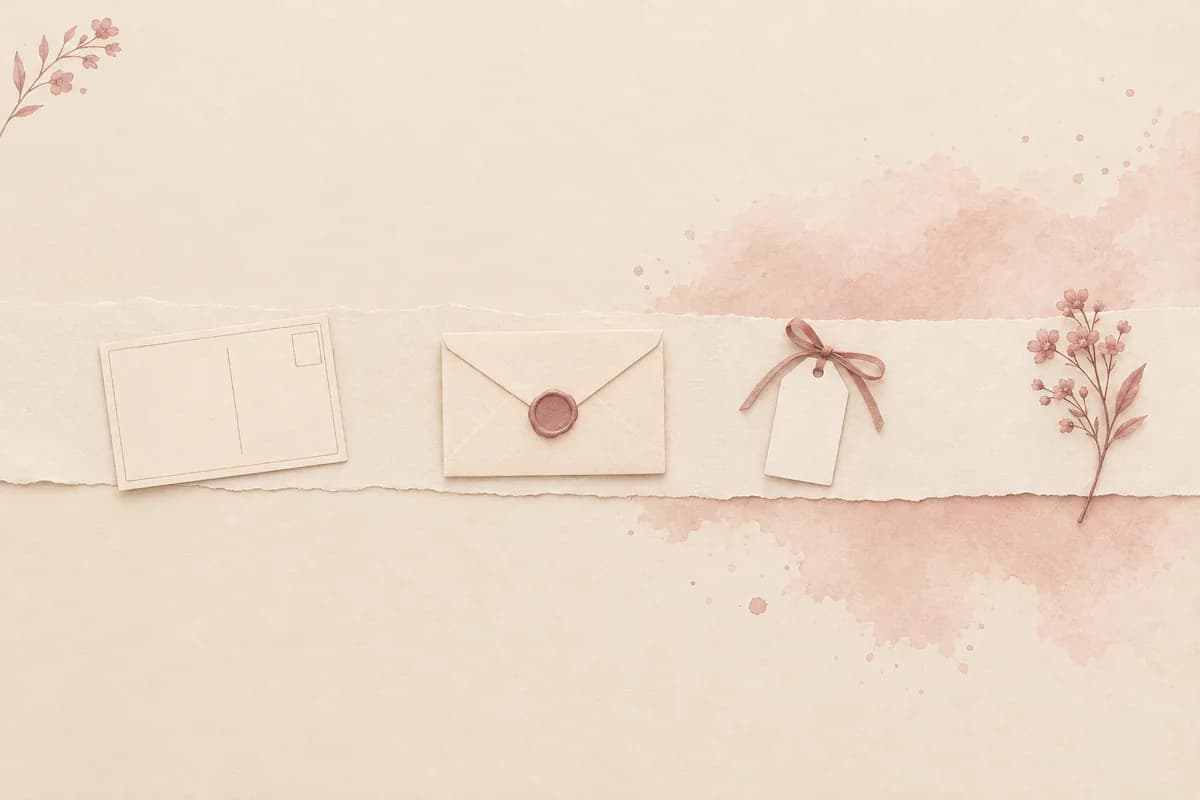
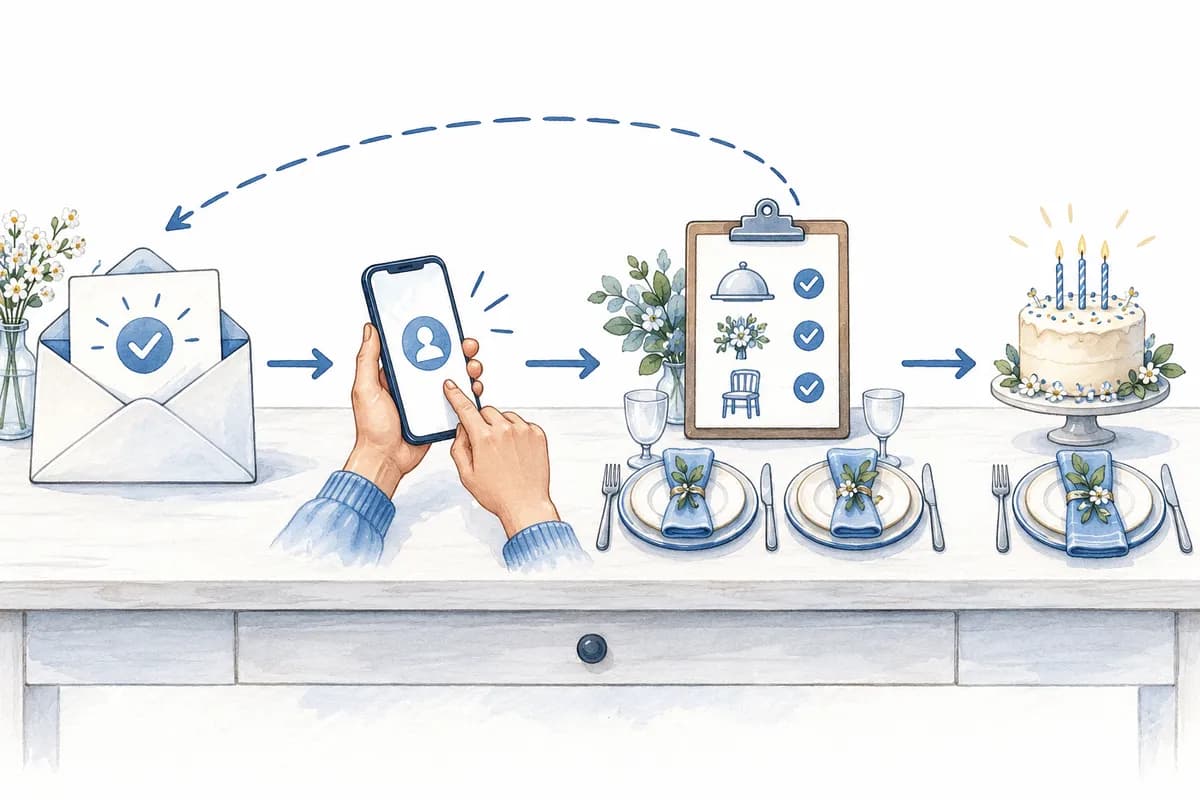
Digital illustration. Count back from the wedding day: save-the-dates first, then the invitation, then the reply-by date.
- Save-the-dates
- About four to six months before the wedding, earlier for a destination wedding.
- Invitations
- Six to eight weeks before the wedding; the early end when many guests travel.
- Reply-by date
- Three weeks before a local wedding, or four weeks when many guests travel.
- Send wedding invitations six to eight weeks before the wedding, and save-the-dates about four to six months before.
- Set the reply-by date three weeks before a local wedding, or four weeks before when many guests travel.
- Invite the wedding party, their partners, the officiant and close family to the rehearsal dinner, three to six weeks ahead.
- On an online invitation, the guest list does the job of the inner envelope: one entry per household, with each extra guest named.
When should you send wedding invitations?
Mail or send wedding invitations six to eight weeks before the wedding. Brides gives that range, and it is the one our RSVP deadline guide uses. Go to the early end when guests travel, and earlier still when much of your list lives abroad.
The table puts each step next to who recommends it. Where two sources differ, both numbers are shown, so you can pick the one that fits your guest list.
| Step | When | Who says it |
|---|---|---|
| Save-the-dates | 4 to 6 months before; earlier for a destination wedding | Brides. |
| Invitations, local wedding | 6 to 8 weeks before | Brides; InviteBird's RSVP deadline guide. |
| Invitations, many guests travel or a holiday weekend | 8 weeks before, the early end of the range | InviteBird's RSVP deadline guide. |
| Invitations, much of the family lives abroad | At least 12 weeks before | Brides. |
| Invitations, destination wedding | About 4 months before | Brides (RSVP guide by Ellen O'Brien). |
| Two-wave guest list | First wave at least 3 months before; each wave gets at least 4 weeks to reply | Anna Post, Emily Post Institute. |
| Rehearsal dinner invitations | 3 to 6 weeks before the dinner | Emily Post Institute; Brides. |
| Reply-by date | 3 weeks before a local wedding; 4 weeks when many guests travel | InviteBird's RSVP deadline guide. Emily Post: 2 to 3 weeks. Brides: 3 to 4 weeks. |
| Final count to the caterer | The date in your caterer's or venue's contract | Your caterer. |
Why do the numbers differ? Each source weighs two needs differently. A short window keeps the date fresh in guests' minds, and a long one gives travelers time to book.
When do save-the-dates go out?
Send save-the-dates about four to six months before the wedding, and earlier for a destination wedding, says Brides. They are optional, but they help most when guests must travel or book rooms. A save-the-date promises an invitation, so send one only to people you are sure to invite.
A save-the-date gives the date, the town and a note that the invitation will follow. The invitation comes later with the full details: the hosts, the time, the venue and how to reply. The wording guide linked below has lines for both.
Email is fine for a save-the-date, according to the Emily Post Institute, which keeps paper for the invitation itself. Brides suggests having your wedding details online by the time save-the-dates go out, so travelers can start planning.
How much earlier for a destination wedding or traveling guests?
Give traveling guests more notice by sending the invitations at the early end, eight weeks out. For a destination wedding, Brides suggests mailing invitations about four months ahead. Published advice on destination weddings varies widely, so let your hotel's dates guide you.
- A few guests overseas: send their invitations with everyone else's, and call or email them a heads-up first, as Brides suggests.
- Much of the family abroad: Brides suggests at least 12 weeks.
- A holiday weekend or a busy travel season: send eight weeks out, as our RSVP deadline guide suggests.
Work it out for your wedding date
Count back from your wedding day, one step at a time. Here is the full plan for one Saturday wedding, using the ranges above.
Counting back from a Saturday, June 5, 2027 wedding
Fictional example. Adapt the details for your event.
December 5, 2026 to February 5, 2027: save-the-dates go out, six to four months before.
By early April: the guest list is final, with a name and an email or phone number for every household.
April 10 to April 24: invitations go out, eight to six weeks before.
April 23 to May 14: rehearsal dinner invitations go out, six to three weeks before the Friday, June 4 dinner.
May 8: a reminder set for 28 days before the wedding reaches every guest with an email who has not replied.
May 15: the reply-by date, three weeks before.
May 16 to May 21: the couple calls or texts anyone still missing.
May 22: the caterer gets the final count and meal choices, two weeks before.
June 5: the wedding.
If many guests travel, send every invitation on April 10. Move the reply-by date to May 8, four weeks before, and set the reminder for 35 days before: May 1.
Swap in your own date and your caterer's count date, and the rest follows. If the caterer wants numbers earlier, move the reply-by date earlier by the same amount.
How do you address wedding invitations?
Address each invitation to everyone it invites, by full name, with titles on a formal envelope. The Emily Post Institute's rules below cover most households. Ask a guest how they like their name written when you are not sure.
An inner envelope used to list exactly who was invited, and by leaving names off, who was not. When an invitation has only one envelope, the names on the outside carry that message.
How does addressing work on an online invitation?
On an online invitation, your guest list does the job of the envelopes. Make each household one guest entry, with a name and an email or phone number. The people coming with that guest are recorded and named on the same entry.
| On paper | On an online invitation |
|---|---|
| Outer envelope: the household's names and mailing address | One guest entry: a name plus an email or phone number. |
| Inner envelope: exactly who is invited | The extra guests recorded on that entry, each with a name. |
| Children listed under their parents | Record each child as an extra guest on the parent's entry, by name. |
| "and Guest" for an unnamed companion | Allow extra guests for the whole event, 1 to 10 per reply; guests can name them when they reply. |
| A companion you know by name | Add the plus-one to the guest's entry and type the companion's name. |
| Return address for replies | Replies land on your Guests tab, with party sizes and names. |

Digital illustration. The inner envelope names who is invited; on an online invitation, the guest entry and its named extra guests do the same job.
- On paper
- The outer envelope carries the household and its address; the inner envelope lists exactly who is invited.
- Online
- One guest entry per household, with a name and an email or phone, and each extra guest named on that entry.
The extra-guest limit is set for the whole event, and a guest's own reply sets their party up to that limit. For an adults-only wedding, set the event to no extra guests, so each reply covers one person.
If you invite a few children or named companions anyway, record them on that household's entry yourself. Then check the household's party on your guest list once they reply.
If you also share one link with everyone, turn on "Only guests on my list can RSVP". InviteBird then checks the name and email or phone a guest enters against your guest list.
Who do you invite to the rehearsal dinner, and when?
Invite the wedding party and their partners, the officiant, and close family. Send the invitations three to six weeks ahead, with directions and a way to reply. Both the Emily Post Institute and Brides give that window.
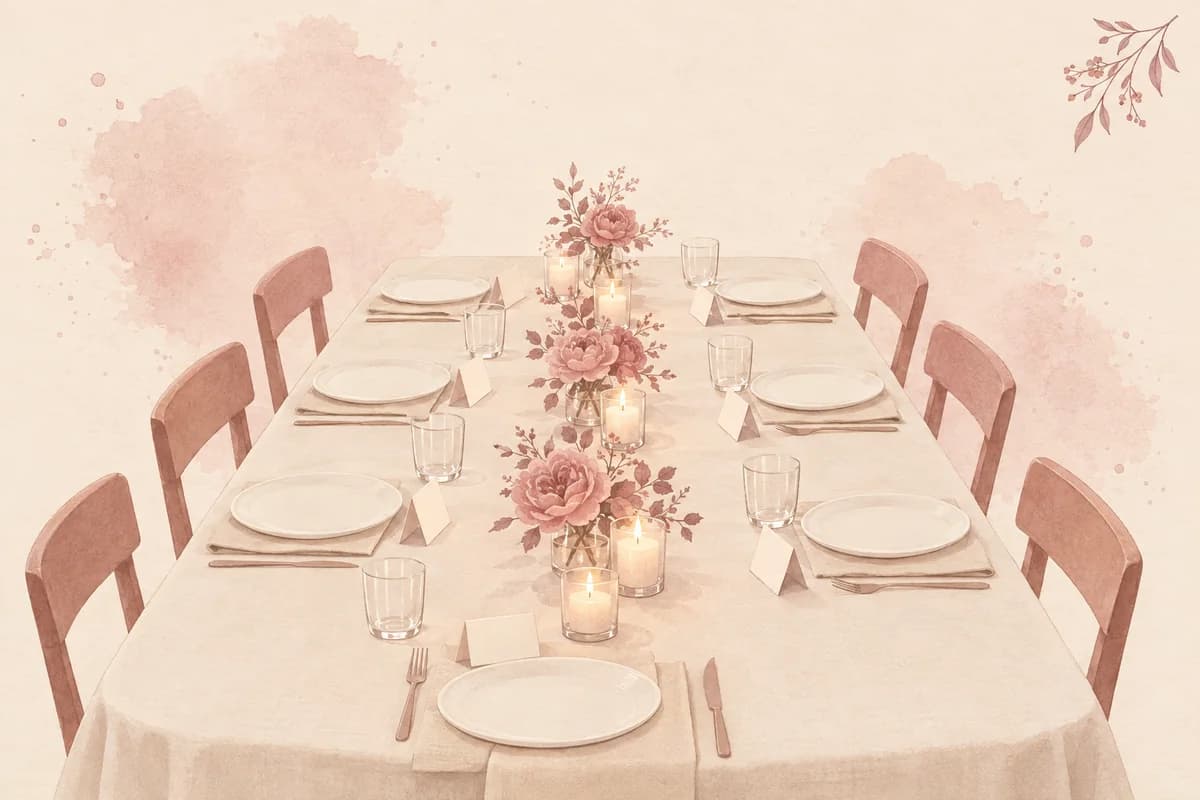
Digital illustration. The rehearsal dinner list starts with the wedding party, their partners, the officiant and close family.
- Invite
- The wedding party and their partners, the officiant and partner, parents, stepparents, grandparents, siblings and parents of young attendants.
- Your choice
- Out-of-town guests and close friends, if you wish and the budget allows.
Out-of-town guests are welcome but not required. Brides calls inviting them a kind thank-you for the trip. The Emily Post Institute notes that close friends from out of town sometimes join.
Traditionally, the groom's family hosts the rehearsal dinner, but it is not a rule. Either family can host, the couple can host, or both families can share it. The invitation can be printed, handwritten, phoned or emailed, depending on how formal the dinner is.
What does not go on a wedding invitation?
Leave gifts and registry details off the invitation, and keep extra details on an insert or your event page. Anna Post of the Emily Post Institute lists the basics every invitation needs: who is hosting, what the event is, who is marrying, the date, the time and place, and how to reply.
| Detail | Where it goes |
|---|---|
| Registry or gift requests, even "no gifts, please" | Not on the invitation or its inserts; on your event page or wedding website. |
| Dress code | An attire or details card, or your event page. |
| Hotel, travel and directions | An insert card, or your event page. |
| Adults only | Shown by whose names are on the invitation; a short line on the details card if needed. |
| Plus-ones | Shown by naming the companion, or "and Guest". |
| Reply-by date and how to reply | On the reply card, or the reply line of an online invitation. |
For ready-made adults-only, plus-one and reply lines, see the wedding invitation wording guide linked below.
Is it OK to send wedding invitations online?
It can be, but etiquette writers do not agree. Brides answers "Yes" in its guide to digital invitations, updated July 27, 2026. Its own timing guide still says to mail a printed invitation to every guest.
The Emily Post Institute holds the traditional view. It prefers a printed invitation for the wedding itself. Email is fine for save-the-dates, informal pre-wedding parties and as one way to reply.
Digital illustration. A printed invitation and an online one can go out together: paper for the guests who want it, a link for everyone else.
- Paper
- Mailed to guests who prefer it; you add their reply to the guest list yourself.
- Online
- Sent by email or text; guests reply at the link by the reply-by date, with no account or app.
You do not have to choose one for everyone. Mail printed invitations to the guests who expect paper, and send the rest a link. When a reply comes back by phone or mail, add it yourself on the InviteBird Guests tab.
InviteBird sends each guest one invitation, by email or by text to a US or Canada mobile number. Every send also makes a link you can share yourself. Guests reply at the link with no account or app.
Send your invitations with a reply-by date
Choose a design, add your guests, set the reply-by date, and send by email or text. Replies, party sizes and plus-one names collect in one guest list.
InviteBird invitations are design free, pay when you send — from $9.99. Plans are one-time per event and sized by guest count, plus-ones included. Flight is $49.99 for up to 100 guests, and Soar is $89.99 for up to 250.
Common questions about when to send wedding invitations
How far in advance should I set my wedding RSVP?
Three weeks before a local wedding, or four weeks when many guests travel. The Emily Post Institute suggests two to three weeks and Brides three to four. Check your caterer's final count date first, and keep a week before it to follow up.
Is 3 months too early to send out wedding invitations?
For a local wedding, it is earlier than you need, and Brides notes that guests given too long to reply may put it off. Three months makes sense when much of your family lives abroad, where Brides says at least 12 weeks. It also fits the first wave of a two-wave list.
When should I send wedding invitations if I didn't send save-the-dates?
No source we checked gives a separate number for this. Our suggestion is the early end of the range, eight weeks before, and earlier if guests must fly or book rooms. A quick call or message to faraway family helps too.
What's the difference between a save-the-date and an invitation?
A save-the-date is an early heads-up with the date and town, sent four to six months ahead. The invitation is the formal ask, sent six to eight weeks ahead, with the hosts, time, venue and how to reply.
How do you send a save-the-date?
By mail or by email; the Emily Post Institute says email is fine for this step. Send it only to people you are sure to invite. Include the date, the town and a link to your event page if you have one.
Who do you address first, husband or wife?
Either one: the Emily Post Institute says the order of a couple's names no longer matters. The exception is rank. A person with a higher title, such as a doctor, an officer or an elected official, is named first.
What are the etiquette guidelines for addressing a wedding invitation envelope?
Name everyone invited, with titles and full names. Spell out street names, skip middle initials and list children under their parents. Name a companion if you can, and use your return address for replies and gifts.
What are 10 examples of invitation sentences?
Our wedding invitation wording guide, linked below, has ten ready sentences, plus full examples for every host.
Put the plan into practice
- Browse wedding and engagement invitations
Designs for the wedding and the parties around it, each with online replies and a reply-by date.
- Track RSVPs online
Replies, party sizes, named plus-ones and meal choices land in one guest list.
- Send invitations and reminders
Send by email or text and follow up with the guests who still need to answer.
- Set a reply-by date in InviteBird
Show an RSVP by line on the invitation and, if you choose, stop new replies after it.
- Schedule an RSVP reminder
Reminders go 7, 3 or 1 day before the event, or a custom number of days, to guests who have not replied.
- Plus-one limits and companion names
Allow none or 1 to 10 extra guests per reply, and record each companion's name.
- Build your wedding guest list
Add each household with a name and an email or phone, or import a list from a file.
- How to choose your RSVP deadline
Work back from the caterer's headcount date, with a worked wedding example and follow-up messages.
- Wedding invitation wording examples
Host lines, reply lines and adults-only and plus-one lines to put on the invitation.
- How to address wedding invitations
Envelope and online examples for couples, families, plus-ones and titles.
Sources and further reading
- Brides: This Is When You Should Actually Send Out Wedding Invitations
Brides, by Heather Lee and Jaimie Mackey, updated July 27, 2026. Invitations six to eight weeks before; save-the-dates four to six months before, earlier for destination weddings; RSVPs about one month before; at least 12 weeks when much of the family lives abroad, with a heads-up call or email to a few overseas guests; wedding details online once save-the-dates are out; a mailed printed suite for every wedding guest; rehearsal dinner invitations three to six weeks ahead. Opened October 15, 2026.
- Brides: How Much Time Should You Give Guests to RSVP for Your Wedding?
Brides, by Ellen O'Brien, updated November 4, 2025: replies due three to four weeks before the wedding (guests given too much time may put it off); for a destination wedding, invitations about four months out and RSVPs two months before. Her companion Brides guide, Digital Wedding Invitations: What to Consider Before Sending (updated July 27, 2026), answers Yes to whether digital wedding invitations are okay; both opened October 15, 2026.
- Emily Post Institute: How to Word a Wedding Response Card
The Emily Post Institute, published June 23, 2015, updated December 28, 2020. A reply-by date usually two to three weeks before the wedding, to leave time to follow up and give caterers a head count. Opened October 15, 2026.
- Emily Post Institute: Inside Weddings: Modern Invitations
Anna Post for the Emily Post Institute, published July 24, 2015, updated November 22, 2020. What every invitation must say; no mention of gifts; the inner envelope lists exactly who is invited; the return address is where gifts go; a standby list is risky, and a second wave needs the first mailed at least three months out with at least four weeks to reply. Opened October 15, 2026.
- Emily Post Institute: Addressing and Sending Wedding Invitations
The Emily Post Institute, published August 2, 2020, updated January 21, 2021. Both members of a married couple are named; no abbreviations except titles; children listed under their parents; an unmarried couple at one address joined by and; and Guest on the inner envelope or a note; replies go to the return address. Opened October 15, 2026.
- Emily Post Institute: Guide to Addressing Correspondence
The Emily Post Institute, published August 2, 2020, updated May 21, 2021. Either name of a couple may come first, except that the person with a higher rank or title goes first; Mx. is a title anyone may use. Opened October 15, 2026.
- Emily Post Institute: The Rehearsal Dinner
The Emily Post Institute, published June 17, 2015 (no update date shown). Who hosts, who is invited, and invitations three to six weeks ahead with directions and RSVP details. Opened October 15, 2026.
- Emily Post Institute: Wedding Email Dos and Don'ts
The Emily Post Institute, published August 14, 2015, updated December 19, 2020. A printed invitation is preferred for the wedding itself; email suits save-the-dates, informal pre-wedding parties and an optional way to reply. Opened October 15, 2026.
Ready to put this into practice?
Pick a design, add your details and send it with InviteBird.Browse wedding and engagement invitations